

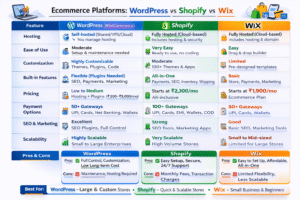
A detailed comparison of eCommerce platforms such as WordPress, Shopify, and Wix enables businesses to make the right choice according to their requirements and expertise. WordPress, when used in conjunction with WooCommerce, is the most flexible and customizable eCommerce platform, which is ideal for those who want complete control over their online store. Shopify, being a completely hosted eCommerce solution, is designed to be user-friendly, allowing businesses to set up their online store in a matter of minutes without worrying about the technicalities. Wix is a website builder with an eCommerce solution that is perfect for small businesses and startups.
Each eCommerce platform has its own strengths and weaknesses, including pricing, flexibility, scalability, and functionality. WordPress is the most flexible and customizable eCommerce platform but requires hosting and technical expertise. Shopify is a completely hosted eCommerce solution that provides hosting, security, and payment processing in one package. Wix is a website builder that is simple to use and has drag-and-drop functionality with beautiful templates. Other considerations that play a significant part in making the right choice include SEO optimization, payment gateways, app stores, and scalability.

Built for Ecommerce
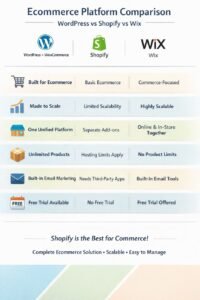

Wix also provides ecommerce features within its platform, allowing users to create online stores with product listings and payment gateways. While it is easy to use, Wix is more suitable for small-scale businesses rather than large ecommerce operations.
Shopify, on the other hand, was built specifically for commerce. Every feature on Shopify is centered around running an online or in-person retail business. Its themes, apps, checkout system, payment integrations, and inventory tools are all optimized for selling. This ecommerce-first approach makes Shopify a strong choice for entrepreneurs who want a powerful and streamlined selling experience.
Made to Scale
When it comes to growth, scalability plays a major role. WordPress is a good option for bloggers and small business owners who want flexibility. With the right hosting and technical setup, WordPress can scale, but it requires manual upgrades and performance optimization as traffic grows.
Wix is ideal for freelancers and small businesses with limited product catalogs. While it offers ecommerce functionality, it may not be the best solution for businesses planning rapid expansion or high-volume sales.
Shopify stands out in terms of scalability. It offers tiered pricing plans that allow businesses to upgrade as they grow. Whether you’re running a startup or a large enterprise, Shopify provides advanced reporting, automation, international selling tools, and high-level integrations. Businesses can scale without worrying about hosting performance or technical complexity.
One Unified Platform
Both WordPress and Wix rely heavily on extensions, plugins, or third-party apps to integrate multiple sales channels. If you want to expand from online selling to a brick-and-mortar store, you will need to install a separate POS (Point of Sale) plugin on WordPress. Similarly, Wix requires additional tools for offline sales integration.
Shopify provides a seamless unified system where online and in-person sales operate on one Ecommerce platform. Its built-in POS system allows businesses to manage inventory, payments, and reporting across both online stores and physical locations. Unified reporting gives business owners a complete overview of total sales performance, customer data, and revenue insights in one dashboard.
Unlimited Products
Product limits are important for growing ecommerce businesses. On WordPress, you can technically add unlimited products, but this depends on your hosting provider’s storage and server capabilities. If your hosting plan has restrictions, it can affect performance.
Wix also allows product additions, but large product catalogs may impact speed and performance depending on your plan.
Shopify allows businesses to add unlimited products without worrying about storage limits on standard plans. Whether you sell a single product or thousands of SKUs, Shopify’s infrastructure supports growth without technical barriers.
Built-in Email Marketing
Marketing tools are essential for ecommerce platform success. WordPress and Wix both require third-party integrations for advanced email marketing. You may need to connect external services to build campaigns and track performance.
Shopify includes its own built-in email marketing system. Businesses can create professional email campaigns using ready-made templates, send them directly from their custom domain, and track open rates, clicks, and conversions. This integration allows store owners to manage marketing and sales in one place without relying heavily on external tools.
Free Trial
Another major difference is the availability of a free trial. WordPress requires purchasing hosting and domain services before building a live ecommerce site. Wix offers limited free plans but with restrictions.
Shopify provides a free trial period that allows users to design, customize, and even launch their online store before committing to a paid plan. During this trial, users can explore themes, add products, and install apps from the Shopify App Store. This gives new entrepreneurs the opportunity to test the platform risk-free.
Conclusion
While WordPress and Wix both provide ecommerce capabilities, Shopify is specifically designed for commerce-focused businesses. WordPress offers flexibility and control, Wix provides simplicity for small businesses, and Shopify delivers a complete, scalable, and unified ecommerce solution. The right choice depends on your business size, growth plans, and technical preferences.