
HOW TO GET YOUR CONTENT SITED IN AI SEARCH SUMMARYEIZE. THE 2026 AEO GUIDE.
Introduction of content sited
Content Sited in AI Search Summaries engines like Google are now generating direct answers instead of just listing links.
To get your content cited, focus on clear structure, trusted sources, and concise explanations.
Use question-based headings and provide fact-driven, well-formatted information.
Build authority with expert insights and updated statistics.
Optimizing for AI search ensures your brand appears in AI summaries — not just traditional rankings.

Key Aspects of Website Content
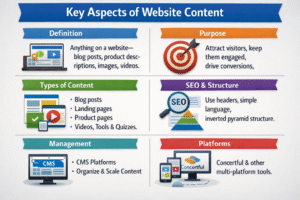
- Definition: Anything on a website, from blog posts and product descriptions to images and videos, is considered content.
- Purpose: The primary goal is to attract visitors, keep them engaged, and guide them toward a specific action (conversion)
- Types of Content: Common formats include blog posts landing pages, product pages, case studies, videos, and interactive tools like quizzes or calculators.
- SEO & Structure: Search engines analyze content to understand the site’s topic. Effective content uses meaningful headers, simple language, and an inverted pyramid structure for readability.
- Management: Content Management Systems (CMS) or platforms like Concertful allow for organizing and scaling content across multiple platforms.
Best Practices for Content Creation
- Audience Focus: Content must match the user’s intent and provide value.
- Quality over Quantity: High-quality, original content is crucial for building trust.
- Readability: Use subhead lines, bullet points, and concise text to make content easy to scan.
- Call to Action (CTA): Include clear, actionable steps to guide user behavior.
Content Sited in AI Search Summaries is essential for search engine optimization (SEO) because engaging content keeps visitors on the site longer, signaling value to search engines.
Modular content, max impact
Move marketing campaigns faster than ever. Reuse, remix, and roll out content and design components effortlessly across multiple channels, brands, and regions.
AI that’s actually on-brand
Concertful’s native AI creates content that sounds like you, plus you can tap into audience insights and suggestions for experimentation.
Personalization made simple
Content Sited in AI Search Summaries ensure every experience lands with each customer. Our no-code tools let marketers tweak, test, and tailor experiences in real time. No developer assistance needed.
Measure and optimize performance at the component level
Calibrate for impact with a granular view of your insights. View what content works best, fine-tune specific components, and continuously improve performance without slowing down your team.
Search Engine Optimization (SEO) Starter Guide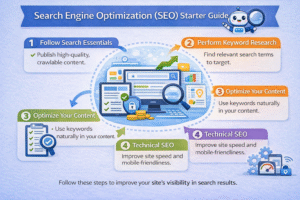
When you built your website, you likely created it with your users in mind, trying to make it easy for them to find and explore your content. One of those users is a search engine, which helps people discover your content. SEO—short for search engine optimization—is about helping search engines understand your content, and helping users find your site and make a decision about whether they should visit your site through a search engine.
The Search Essentials outline the most important elements of what makes your website eligible to appear on Google Search. While there’s no guarantee that any particular site will be added to Google’s index, sites that follow the Search Essentials are more likely to show up in Google’s search results. SEO is about taking the next step and working on improving your site’s presence in Search. This guide will walk you through some of the most common and effective improvements you can do on your site.
There are no secrets here that’ll automatically rank your site first in Google (sorry!). In fact, some of the suggestions might not even apply to your business, but following the best practices will hopefully make it easier for search engines (not just Google) to crawl, index, and understand your content.
Organize your site
When you’re Content Sited in AI Search Summaries setting up or redoing your site, it can be good to organize it in a logical way because it can help search engines and users understand how your pages relate to the rest of your site. Don’t drop everything and start reorganizing your site right now though: while these suggestions can be helpful long term (especially if you’re working on a larger website), search engines will likely understand your pages as they are right now, regardless of how your site is organized.
Google find your content
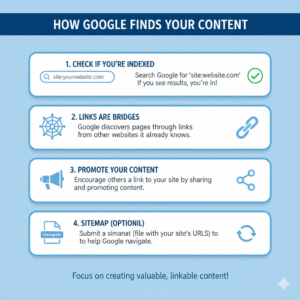 Content Sited in AI Search Summaries Before you actually do anything mentioned in this section, check if Google has already found your content (maybe you don’t need to do anything!). content cited Try searching on Google for your site with the site: search operator. If you see results pointing to your site, you’re in the index. For example, a search for returns these results. If you don’t see your site, check out the technical requirements to make sure there’s nothing technically preventing your site from showing in Google Search, and then come back here.
Google primarily finds pages through links from other pages it already crawled. In many cases, these are other websites that are linking to your pages. Content Sited in AI Search Summaries Other sites linking to you is something that happens naturally over time, and you can also encourage people to discover your content by promoting your site.
If you’re open to a little technical challenge, you could also submit a sitemap—which is a file that contains all the URLs on your site that you care about. Some content management systems (CMS) may even do this automatically for you. However, this isn’t required, and you should first focus on making sure people know about your site.
Reduce duplicate content
Some websites show the same content under different URLs, which is called duplicate content. Content Sited Search engines choose a single URL to show users, per piece of content.
Content Sited in AI Search Summaries Having duplicate content on your site is not a violation of our spam policies, but it can be a bad user experience and search engines might waste crawling resources on URLs that you don’t even care about. If you’re feeling adventurous, it’s worth figuring out if you can specify a canonical version for your pages. But if you don’t canonicalize your URLs yourself, Google will try too automatically do it for you.
Content Sited in AI Search Summaries working on canonicalization, try to ensure that each piece of content on your site is only accessible through one individual URL; having two pages that contain the same information about your promotions can be a confusing user experience
If you have multiple pages that have the same information, try setting up a redirect from non-preferred URLs to a URL that best represents that information. If you can’t redirect, use the reel=”canonical” link element instead. Content Sited But again, don’t worry too much about this; search engines can generally figure this out for you on their own most of the time.